.png)
Entering the Beijing Market: A Strategic Starting Guide for North West Businesses

Liverpool just made history at the Royal Liver Building. On 9 June 2026, Liverpool BID Company and the Beijing Investment Promotion Bureau signed a Memorandum of Understanding at the Royal Liver Building, during a visit by a senior delegation from Beijing led by Tang Yonghong, Deputy Director of the Beijing Investment Promotion Bureau. The delegation also included representatives from the Beijing Municipal Commission of Development and Reform, the Beijing Central Business District Administration Committee, Beijing's district-level investment promotion agencies, the Embassy of the People's Republic of China in the United Kingdom, and the Consulate General of the People's Republic of China in Manchester.
This was not a symbolic gesture. This was a formal, operative agreement establishing structured communication mechanisms, regular meetings, business facilitation, market intelligence, introductions and delegation programmes between two cities. It takes immediate effect and will focus on advanced manufacturing, life sciences, future industries, culture, tourism, music and the creative economy, as well as wider professional, educational and cultural exchanges.
Bill Addy, Chief Executive of Liverpool BID Company, captured it well: 'Liverpool has always been an international city, built on trade, innovation and global connections. This Memorandum of Understanding provides an important platform to deepen relationships between Liverpool and Beijing, creating opportunities for businesses, institutions and organisations in both cities.'
And Tang Yonghong was equally direct: 'This agreement reflects the growing relationship between Beijing and Liverpool and our shared commitment to promoting economic cooperation, business engagement and international exchange.'
This is a genuine, reciprocal opportunity. Liverpool businesses now have a supported pathway into China's capital. Beijing firms are getting equivalent support through Liverpool BID to establish here. The question is not whether this is a real opportunity. The question is whether your business is positioned to take it seriously.
What You're Actually Dealing With
Before we get to practical steps, let us be honest about the scale of what Beijing represents.
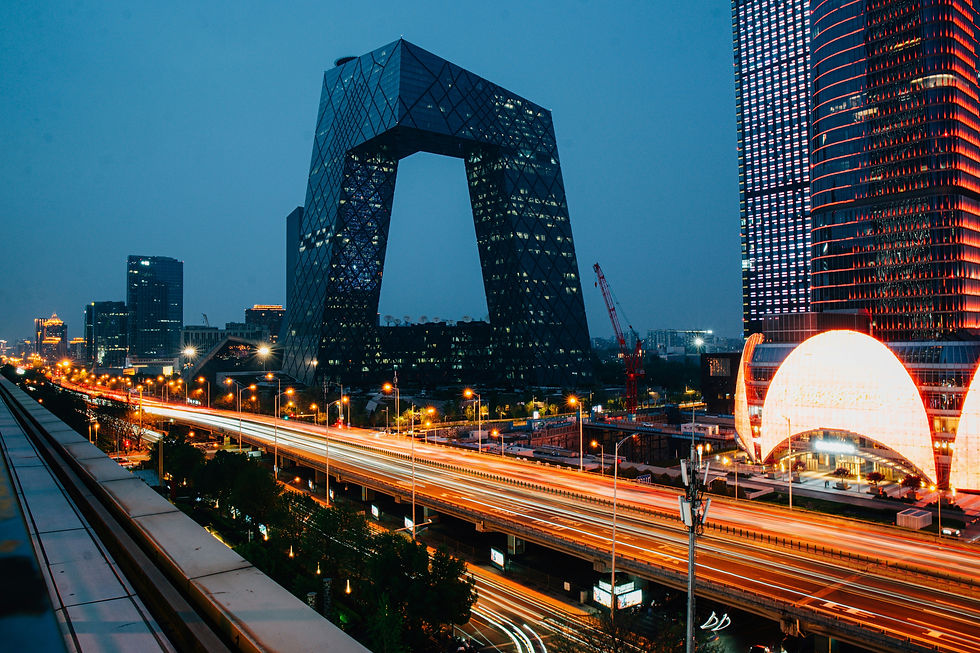
The Beijing Central Business District (Beijing CBD) is one of the most concentrated international business environments anywhere in the world. It is home to nearly 50 per cent of the regional headquarters of multinationals in Beijing, 70 per cent of Beijing's international financial institutions, 80 per cent of international organisations and foreign chambers of commerce, and 90 per cent of international media outlets in Beijing. Over 200 Fortune Global 500 companies operate there. The world's top 10 law firms, consulting companies and human resources companies all have presence in the district. Around 90 per cent of Beijing's international business exhibitions and 50 per cent of its international conferences are held within the CBD.
This is not a niche or emerging market. This is a fully formed, globally connected commercial ecosystem. And through this MoU, Liverpool BID Company has opened a formal channel into it, backed by the Beijing Investment Promotion Bureau, a bureau-level institution directly under the People's Government of Beijing Municipality, whose primary mandate is attracting investment and providing specialist services to facilitate that investment.
Beijing's Global Partners of "Invest Beijing" framework, which includes the China-Britain Business Council (CBBC), Ernst & Young, PwC, Deloitte, Cushman & Wakefield, the Beijing Association of Enterprises with Foreign Investment (BAEFI) and WBFC Limited (based in London's Covent Garden), represents the infrastructure already in place to support UK businesses entering the Beijing market.
The China-Britain Business Council, which has been promoting trade and investment between the UK and China since 1954, is an official partner of the UK's Department for Business and Trade. It has nearly 1,000 members and is one of the most established entry points for British SMEs looking to work with Beijing. Liverpool City Region also has a well-established relationship with China: China is already the third largest goods export destination for the City Region, Liverpool has been twinned with Shanghai since 1999, and the city is home to Europe's oldest Chinese community.
The foundations are there. The formal structure is now in place. What is needed is for businesses to prepare themselves properly.
5 Things Businesses in Merseyside and the North West Can Do Right Now
1. Get Serious About Language
This is the point most UK businesses avoid, and it is the one that separates those who succeed in China from those who struggle.
Mandarin is the language of government, education, media and business in China. While English is spoken in international business contexts, defaulting entirely to English sends a signal to Beijing business counterparts that you have not invested in understanding their world. That signal matters, because in Chinese business culture, relationship trust is built incrementally and over time. Showing even basic Mandarin courtesy phrases, having your key materials translated by a professional rather than a machine, and working with a qualified interpreter for formal meetings all demonstrate the kind of respect that opens doors.
Your company profile, capability statement, and any investor-facing materials should be professionally translated into Mandarin Chinese. This is not a cosmetic exercise. It is a practical necessity. Machine translation of complex business content regularly produces errors that can undermine credibility. Use a human translator with business and sector expertise.
Consider also incorporating bilingual elements into your website, even at a summary level, particularly if your target sectors align with the MoU's focus areas of advanced manufacturing, life sciences, creative industries or tourism.
2. Build Your WeChat Presence Before You Need It
In China, WeChat (微信) is not a messaging app. It is the operating system of daily life and business. With over 1.3 billion users, WeChat functions as messaging, professional networking, content publishing, payment, CRM, customer service and e-commerce all within a single platform. In many B2B contexts in Beijing, a WeChat Official Account is considered more important than a company website.
For UK businesses engaging with Beijing counterparts, this has direct practical implications. Email is rarely the primary communication tool in Chinese business. Your Beijing contacts will expect to communicate via WeChat. Business introductions, follow-ups, sharing of materials and building ongoing rapport all happen there.
Setting up a WeChat Official Account gives your business a credible presence on the platform Beijing uses. It also gives you a direct content channel where you can publish in Mandarin, share case studies and demonstrate your expertise to a Chinese business audience.
This is not a long-term aspiration. If you are beginning conversations with Beijing partners through the Liverpool BID facilitation programme, having a WeChat presence in place from the outset demonstrates genuine commitment and preparation.
3. Understand Guanxi and Invest in It
The Chinese concept of guanxi (关系, pronounced roughly as "gwan-shee") refers to the network of relationships, obligations and mutual trust that underpins how business gets done in China. Understanding guanxi is not about adopting a cultural formula. It is about recognising that in Beijing's business community, relationships precede transactions. Trust is built before deals are discussed.
This has several implications for North West businesses. First, the delegation programmes and introduction services offered through the Liverpool BID and Beijing Investment Promotion Bureau partnership are not just networking events. They are the beginning of a relationship investment. They need to be followed up with consistency, patience and genuine interest in the other party's goals.
Second, guanxi is maintained through reciprocity. When Beijing counterparts extend courtesies, share introductions or make time for you, they are investing in the relationship. They will expect that investment to flow both ways. Thinking about what value you can bring to them, not just what you want to gain, is the foundation of any productive China relationship.
Third, the Harvard Program on Negotiation highlights the importance of conducting periodic guanxi audits within your China relationships: ensuring you have multiple contact points rather than a single relationship that could dissolve if one person moves on. Build relationships at more than one level within any Beijing organisation you work with.
4. Know the Channels and Communicate Through Them
Understanding which platforms your Beijing audience actually uses is not a bonus. It is a prerequisite for any communication strategy.
The major platforms active in Beijing's business community that UK businesses should be aware of include:
WeChat (微信): The primary channel for business communication, content distribution, and relationship management. A WeChat Official Account is your equivalent of a website and email list combined.
WeChat Moments and WeChat Official Account Articles: These function like LinkedIn posts and newsletter articles, respectively. Publishing thought leadership content in Mandarin on WeChat positions you as a credible voice in your sector before any face-to-face meeting takes place.
LinkedIn: Note: LinkedIn's professional networking platform has been blocked in mainland China since October 2021, and its China-specific jobs app (InJobs/InCareer) was also shut down in August 2023. LinkedIn cannot be relied upon as a channel for reaching Beijing audiences. WeChat and other China-accessible platforms listed below are the appropriate alternatives.
Maimai (脉脉): The definitive local replacement for LinkedIn. It is China’s largest real-name professional social platform, connecting workers by industry, alma mater, and company. In 2026, Maimai features integrated AI deep-matching tools (powered by DeepSeek-R1) to optimise candidate-employer matching and networking efficiency. It is highly popular among Beijing's massive tech, finance, and venture capital sectors.
Zhihu (知乎): China's equivalent of a professional Q&A platform, used heavily in B2B contexts for demonstrating expertise. For businesses in sectors like life sciences, technology or finance, contributing substantive answers to sector-specific questions builds authority.
Xiaohongshu / RED (小红书) While traditionally known for lifestyle content, Xiaohongshu has grown significantly into a professional and B2B networking tool. Young professionals in creative industries, marketing, architecture, and consulting use it to showcase their personal portfolios and build a client network.
Feishu (飞书) / Lark: Created by ByteDance, this tool has become a favorite platform for startups and creative tech industries in Beijing due to its advanced document collaboration.
DingTalk (钉钉): Alibaba's enterprise app, used extensively by traditional corporations, manufacturing firms, and educational institutions.
Weibo (微博): Useful for broader brand awareness, particularly in creative, tourism and cultural sectors aligned with this MoU.
Offline Networking & Community Integration
Online networking in Beijing is often a bridge to offline connections. Major professional groups rely on these tools to coordinate:
The FCGroup / FC Club: Hosts massive offline mixers, business gatherings, and entrepreneur evenings specifically tailored for foreign and local professionals in Beijing.
Corporate Network (by The Economist Group): Operates high-level networks in Beijing specifically designed for senior executives and multinational leaders.
The key point: your existing Western social media presence on Instagram, Facebook or X is largely invisible to a Beijing business audience due to China's internet restrictions. A parallel, China-facing digital presence is a separate strategic requirement. It does not have to be complex to start. A WeChat Official Account with professionally translated content, updated regularly, is a meaningful starting point.
5. Position Your Business With Clarity, Specificity and Proof
Beijing's business community, and the Beijing Investment Promotion Bureau specifically, deal with multinational companies, Fortune Global 500 firms and sophisticated international investors on a daily basis. They are not easily impressed by generic claims. What impresses them is specificity, credibility and evidence.
This means your business presentation to a Beijing audience needs to answer three questions very clearly:
What do you specifically do, and for whom? Generic sector descriptions do not cut through. A North West advanced manufacturer needs to articulate precisely what they make, what problem it solves, and for what type of customer or industry. A life sciences firm needs to describe their specific capability, any IP or regulatory approvals, and their commercial track record. A creative agency needs a portfolio, not a positioning statement.
Why are you credible? This is where third-party evidence matters. Awards, accreditations, client case studies and measurable outcomes carry genuine weight. If you have worked with well-known brands or institutions, name them (with permission). If you have won contracts or tenders through a competitive process, say so. If you have UK or international industry recognition, it is worth referencing.
Why now, and why Liverpool/the North West? The Beijing delegation's interest is in productive, durable commercial relationships. Explaining how your business fits within the MoU's priority sectors, and positioning Liverpool's strengths in those areas, gives your pitch a context that a Beijing counterpart can connect to the formal partnership structure they have just signed.
Consider creating a dedicated, professionally designed China-facing capability document. Not a repurposed brochure. A document that speaks directly to a Beijing audience, professionally translated, that presents your business in the context of what Beijing's business community values: proven capability, investment readiness, and clear partnership intent.
The Organisations That Can Help You
You do not need to navigate this alone. Several organisations are already structurally positioned to support North West businesses through this process.
Liverpool BID Company is your primary first port of call. Through the MoU, they now have a formal relationship with the Beijing Investment Promotion Bureau and can facilitate introductions, business intelligence and delegation programme access. Contact them directly to register your interest and understand the support available to your business.
The China-Britain Business Council (CBBC) has been the leading British organisation promoting UK-China trade and investment since 1954. It is an official partner of the UK's Department for Business and Trade and a recognised Global Partner of Invest Beijing. For North West SMEs, CBBC provides market entry advice, business clinics, networking events, inward and outward delegations, and sector-specific intelligence. Membership gives you access to a network that spans both countries.
The Beijing Investment Promotion Bureau is a bureau-level institution of the People's Government of Beijing Municipality. Its remit covers attracting investment, market intelligence, business facilitation and coordinating with professional service partners. The Invest Beijing London office, led by Chief Representative Jing Zhou, is the UK contact point and the direct professional link between British businesses and the Beijing investment promotion infrastructure.
The Beijing Association of Enterprises with Foreign Investment (BAEFI) is a Beijing-based organisation comprising Fortune Global 500 companies and multinationals with investment in Beijing. Its mandate includes facilitating communication between Beijing and the international community, protecting the rights of foreign-invested enterprises and helping international businesses navigate Beijing's commercial landscape.
The Beijing Central Business District Administration Committee, one of the signatory organisations to the MoU delegation, governs the most internationally active commercial district in Beijing. It runs the Headquarters Growth Programme, targeting global firms to establish regional or functional headquarters within the CBD. If your business has scale ambitions in China, understanding the CBD's offer is relevant.
What This Moment Actually Requires
Agreements like this MoU create windows. They do not stay open indefinitely. The delegation visit, the roundtables, the formal signing: these moments generate momentum. Businesses that move purposefully in the months that follow benefit from that momentum. Those that wait for a more convenient moment often find the window has narrowed.
Liverpool has a legitimate and historically grounded story to tell Beijing. Europe's oldest Chinese community. Deep trade roots that date back to the city's founding as a port. A twinned relationship with Shanghai that has produced tangible partnerships across manufacturing, life sciences, education and the creative sector. A city region that China already recognises as its third largest UK goods export destination.
That context gives North West businesses a genuine foundation to stand on. Not as newcomers asking for entry, but as partners from a city with proven form in building durable relationships with China.
The work is in being ready: having the right materials, the right language approach, the right digital presence, and the right understanding of how Beijing does business. Businesses that invest in that readiness now will be far better placed to convert the introductions and opportunities this partnership will generate.
Ready to Explore What This Means for Your Business?
If you want to talk through how to approach the Beijing opportunity with clarity and confidence, get in touch here.
The door is open. Let's make sure you're ready to walk through it.
Sources: Liverpool BID Company official website; Beijing Investment Promotion Bureau official page, Beijing Municipal Government; Beijing CBD official profile, Beijing Municipal Government; Global Partners of Invest Beijing, Beijing Municipal Government; China-Britain Business Council; Liverpool City Region Combined Authority trade mission release, March 2025; Harvard Program on Negotiation; Beijing Central Business District Administration Committee. Business Live, 9 June 2026; The Business Desk, 10 June 2026.


Comments